Skip to content


Theresa Kwong
"When I create a piece of jewelry, I strive for visual beauty when viewed from different angles. Craftsmanship, proportion, and comfort of wear are all important to me. All pieces are equally inspired by natural and built environments."
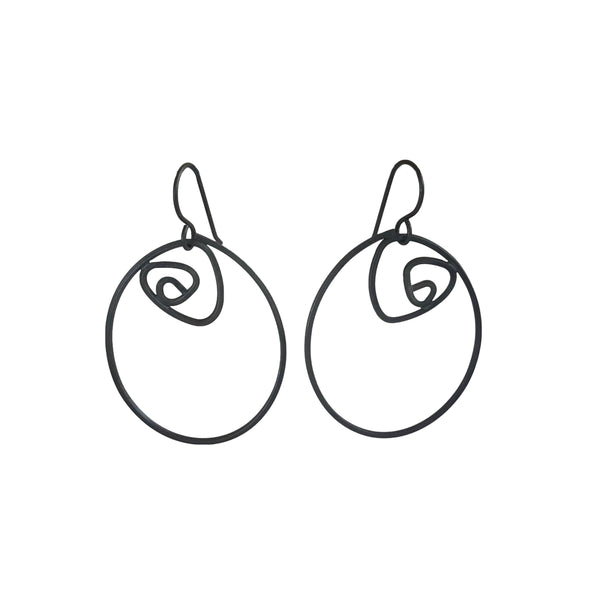
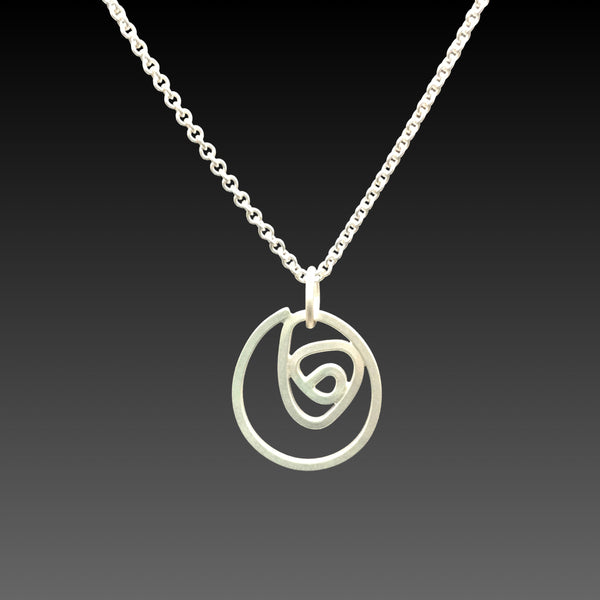
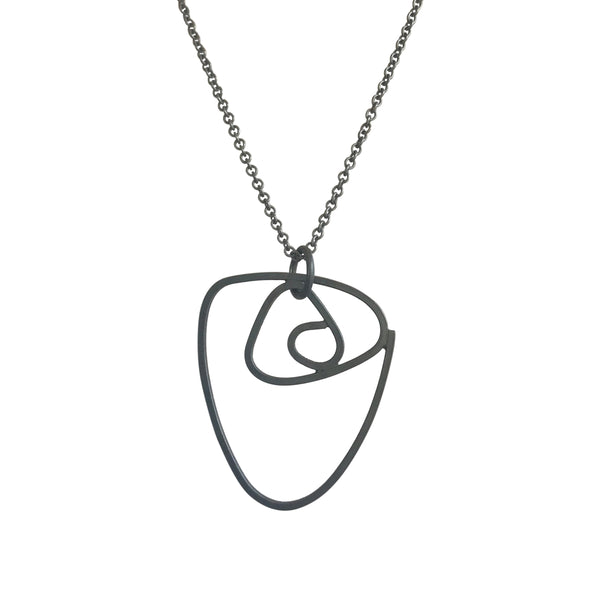
Theresa Kwong's design sensibility comes from years of practicing as an architect. Shell and tensile structures have always fascinated her with their clean lines and sinuous curves. The eye wants to follow the curves, and each curve brings excitement. This is what she wants for her jewelry. Her work expresses tremendous visual movement, reminiscent of Frank Gehry or Zaha Hadid structures.
The artist uses shell-forming and anticlastic raising techniques. Thin, flat sheets of silver, gold, or mokume gane are slowly shaped into 3-D objects using hammers, stakes, and an anvil. The hammer marks left from forming provide beautiful textures which are contrasted with polished highlights. Being a LEED accredited architect, Theresa uses recycled metals whenever possible.
Theresa Kwong originally received her bachelor of arts degree in architecture from the University of California at Berkeley. A career change has brought her to jewelry-making. As an architect, she created 3-D objects on a macro scale; as a metalsmith, she creates 3-D objects on a micro scale. She studied under numerous masters at Revere Academy and is especially influenced by Michael Good.
Awards
American Craft Council, Baltimore Convention Center, Baltimore, MD, 2014-2017
Kings Mountain Art Fair, Kings Mountain Fire Station, Woodside, CA, 2012-2017
Mill Valley Fall Arts Festival, Old Mill Park, Mill Valley, CA, 2013-2017
Niche Awards, Professional Silver Category, USA, 2017
Kings Mountain Art Fair, Kings Mountain Fire Station, Woodside, CA, 2012-2017
Mill Valley Fall Arts Festival, Old Mill Park, Mill Valley, CA, 2013-2017
Niche Awards, Professional Silver Category, USA, 2017
Some filters could not be applied and were reset.